Centralized Content, Individual Accountability: A Better Model for Construction Training
By Chad Udell
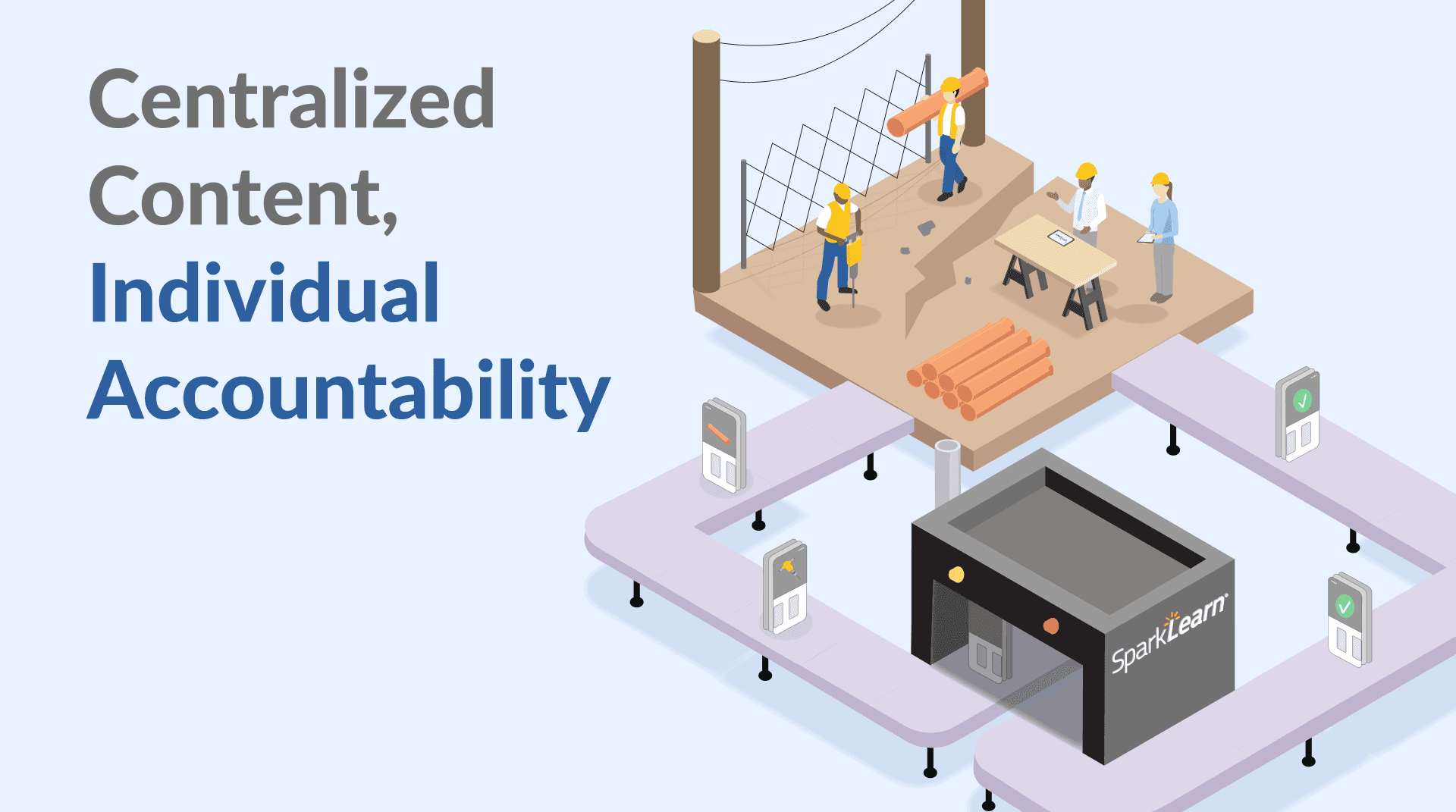
A commercial construction project doesn't stay still. From preconstruction through closeout, the crew shifts, the scope evolves, and the requirements change. What a worker needed to know on day one of a job may not be what they need to know six months in. And what was true for the crew that started the project may not apply to the workers who finish it.
Most training programs aren't built for that reality. They're built for onboarding, a safety meeting, or a certification push before a job kicks off, but once that moment passes, the training infrastructure goes quiet until the next one. In an industry where conditions on the ground change constantly, that gap creates real risk.
When the Project Changes, the Training Has to Change With It
The practical challenge for anyone managing training across a construction project isn't usually creating content. It's keeping it current and making sure the right people have access to the right version of it at the right time.
A procedure changes mid-project. A subcontractor crew rotates onto a site. A certification requirement gets updated. In a fragmented system where content lives in one place, gets distributed another way, and completion records live somewhere else entirely, making that update means touching multiple systems and hoping nothing falls through the cracks.
The better model is one where content creation and distribution live in the same place. A content manager makes an update and it's live for everyone it's assigned to. grA crew rotates in and they're automatically enrolled in what's relevant to them based on their role and location. Nothing has to be manually re-sent. Nothing has to be tracked across a spreadsheet. The platform handles the distribution logic so the people managing training can focus on the content itself.
The Other Side of the Equation
Centralizing content creation and distribution solves the delivery problem. But there's a second problem that often goes unaddressed: knowing what's actually happening once content goes out.
Traditional business reporting tends to be aggregate. Did this group complete this course? What percentage of the workforce is certified? Those are useful numbers at a leadership level but they don't tell the people closest to the work what they need to know.
This is where the model shifts. A platform that captures activity like what each worker completed, when, and how they performed, provides information that is genuinely useful to the people responsible for acting on it. A foreman can see exactly where each crew member stands before a job starts. A regional manager can spot which sites have certification gaps before they become a problem on the ground. A content manager can see which materials are being engaged with and which aren't landing.
That's what xAPI makes possible in practice. Instead of a single report that averages behavior across a workforce, you get individual activity records that tell a specific story about each worker. The content is centralized. The insight is specific.
Why This Matters Across a Project's Life
In commercial construction, the stakes of getting this wrong aren't abstract. A worker who missed an updated procedure, a crew that rotated in without completing required training, a certification that lapsed mid-project — these aren't just administrative problems. They affect safety, they affect timelines, and in some cases, they affect whether a project can continue.
The companies that manage this well have stopped treating training as a one-time event and started treating it as something that runs parallel to the project itself. Content gets updated when conditions change. New crew members get what they need when they arrive. And the people responsible for the work have visibility into their piece of it without needing to request a report from someone else.
That's the shift: not just centralizing where training lives, but making the information it generates useful to the right people at the right level.
How SparkLearn Approaches This
SparkLearn is built around this model. Content is created and managed in one place, and updates reach everyone they're assigned to without manual redistribution. As crew composition changes, assignment rules based on role, location, or group membership handle enrollment automatically.
On the reporting side, SparkLearn captures individual activity through xAPI, which means every completion, every interaction, and every gap is recorded at the person level. A foreman sees their crew. A regional manager sees their sites. Content managers see how their material is actually being used. The insight is scoped to whoever needs it, rather than compiled into a single view that's useful to no one in particular.
For commercial construction companies managing shifting crews across multiple active projects, that combination is what makes training something the operation can actually rely on.
Want to see how it works? We’d be glad to give you a demo!


